A close-up educational photograph, maintaining the sharp focus and warm natural window light from image_2.png, captures a textured white drawing paper on the wooden desk. This paper features a single, detailed graphite sketch, derived from a masterful application of shading techniques learned in Post 3 (image_26.png, image_28.png) and applied to both complex geometry and human features. Above the central composition, a neat Bengali title in graphite text reads: 'আলো-ছায়ার খেলা: স্টিল লাইফ ও পোর্ট্রেট' (Magic of Light & Shadow: Still Life & Portrait). The drawing is a carefully composed scene: a small ceramic mug and a single apple (from the simplified steel life in image_8.png), but rendered with much richer tonal values, and a dimensional human face. The composition shows the mug and apple arranged on a surface, with the dimensional human face positioned as if a reflection or integrated study next to them. The Tripod Grip from image_4.png, holding a well-used graphite pencil from image_2.png, is visible in the foreground, making a final refined shading line, while the kneaded eraser from image_0.png rests nearby. Both the still life objects and the human face are dramatically lit from the upper left (consistent with image_12.png, image_24.png, image_30.png, image_32.png, image_34.png). The human face shows refined shading gradients, showcasing key concepts: a clear 'কোর শ্যাডো (3)' (image_26.png, image_28.png) on the shadowed side of the face and features; 'মিড-টোন (2)' (image_26.png, image_28.png) in the transition areas; 'কাস্ট শ্যাডো (4)' (image_26.png, image_28.png) under the chin; 'রিফ্লেক্টেড লাইট (5)' (image_26.png, image_28.png) subtle areas; and a precise 'হাইলাইট (১)' (image_26.png, image_28.png) on the cheekbone and nose tip. The same logic is applied to the mug and apple. Bengali annotations with neat graphite arrows explicitly point out and label the shading zones on the portrait and objects using numbers (১ to ৬) (image_26.png, image_28.png): 'হাইলাইট (১)', 'মিড-টোন (2)', 'কোর শ্যাডো (3)', 'কাস্ট শ্যাডো (4)', 'রিফ্লেক্টেড লাইট (5)', 'গভীর ছায়া (৬)'. Construction geometry guidelines from image_36.png, image_38.png, image_40.png, image_42.png, image_44.png, image_46.png, image_48.png, image_52.png, image_54.png, image_56.png, image_58.png, and image_60.png are faintly visible, showing their foundational role. Faint perspective grids and ellipses derived from image_14.png, image_16.png, image_18.png, image_20.png, and image_22.png underpin the geometry. The focus is critically sharp on the graphite marks and textured paper, highlighting the texture and progressive stages and underlying geometry. Pencils rest beside the paper. Soft creative glow emanates. existing art tools are neatly arranged but out of focus. Focused young female artist from image_0.png, image_12.png, image_24.png, image_36.png, image_50.png, image_52.png, image_54.png, image_56.png, image_58.png, image_60.png, image_62.png, image_64.png, is sitting on a simple stool near the window (image_0.png) in the background, out of focus.

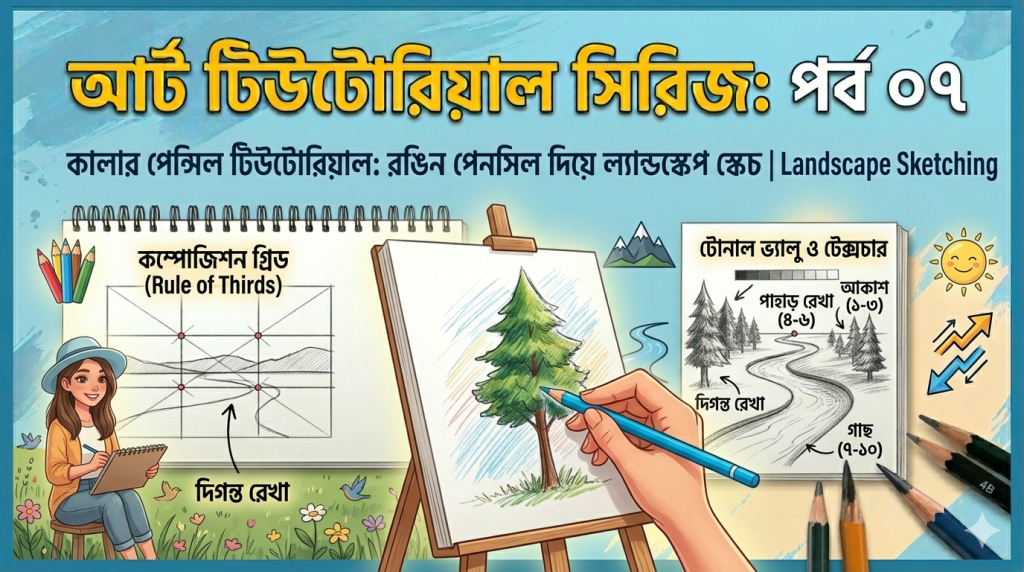
আর্ট টিউটোরিয়াল সিরিজ: পর্ব ০৭ – কালার পেন্সিল টিউটোরিয়াল: রঙিন পেনসিল দিয়ে প্রথম ল্যান্ডস্কেপ স্কেচ

A close-up educational photograph, maintaining the sharp focus and warm natural window light from image_2.png, captures a textured white drawing paper on the wooden desk. This paper features a single, detailed graphite sketch, derived from a masterful application of shading techniques learned in Post 3 (image_26.png, image_28.png) and applied to both complex geometry and human features. Above the central composition, a neat Bengali title in graphite text reads: 'আলো-ছায়ার খেলা: স্টিল লাইফ ও পোর্ট্রেট' (Magic of Light & Shadow: Still Life & Portrait). The drawing is a carefully composed scene: a small ceramic mug and a single apple (from the simplified steel life in image_8.png), but rendered with much richer tonal values, and a dimensional human face. The composition shows the mug and apple arranged on a surface, with the dimensional human face positioned as if a reflection or integrated study next to them. The Tripod Grip from image_4.png, holding a well-used graphite pencil from image_2.png, is visible in the foreground, making a final refined shading line, while the kneaded eraser from image_0.png rests nearby. Both the still life objects and the human face are dramatically lit from the upper left (consistent with image_12.png, image_24.png, image_30.png, image_32.png, image_34.png). The human face shows refined shading gradients, showcasing key concepts: a clear 'কোর শ্যাডো (3)' (image_26.png, image_28.png) on the shadowed side of the face and features; 'মিড-টোন (2)' (image_26.png, image_28.png) in the transition areas; 'কাস্ট শ্যাডো (4)' (image_26.png, image_28.png) under the chin; 'রিফ্লেক্টেড লাইট (5)' (image_26.png, image_28.png) subtle areas; and a precise 'হাইলাইট (১)' (image_26.png, image_28.png) on the cheekbone and nose tip. The same logic is applied to the mug and apple. Bengali annotations with neat graphite arrows explicitly point out and label the shading zones on the portrait and objects using numbers (১ to ৬) (image_26.png, image_28.png): 'হাইলাইট (১)', 'মিড-টোন (2)', 'কোর শ্যাডো (3)', 'কাস্ট শ্যাডো (4)', 'রিফ্লেক্টেড লাইট (5)', 'গভীর ছায়া (৬)'. Construction geometry guidelines from image_36.png, image_38.png, image_40.png, image_42.png, image_44.png, image_46.png, image_48.png, image_52.png, image_54.png, image_56.png, image_58.png, and image_60.png are faintly visible, showing their foundational role. Faint perspective grids and ellipses derived from image_14.png, image_16.png, image_18.png, image_20.png, and image_22.png underpin the geometry. The focus is critically sharp on the graphite marks and textured paper, highlighting the texture and progressive stages and underlying geometry. Pencils rest beside the paper. Soft creative glow emanates. existing art tools are neatly arranged but out of focus. Focused young female artist from image_0.png, image_12.png, image_24.png, image_36.png, image_50.png, image_52.png, image_54.png, image_56.png, image_58.png, image_60.png, image_62.png, image_64.png, is sitting on a simple stool near the window (image_0.png) in the background, out of focus.

(আউটডোর স্টাডি: রঙিন পেনসিল দিয়ে প্রকৃতি থেকে সরাসরি ল্যান্ডস্কেপ স্কেচ করার সহজ কৌশল। ছবি: আকাশ, গাছ, নদী, পাহাড়। লাইভ স্কেচিং। | Landscape Sketching)

আর্ট টিউটোরিয়াল সিরিজের গত পর্বে আমরা শিখেছি কীভাবে গ্রাফাইট পেন্সিল ব্যবহার করে প্রকৃতি থেকে সরাসরি আউটডোর স্টাডি বা ল্যান্ডস্কেপ স্কেচিং (Landscape Sketching) করতে হয়। আমরা কম্পোজিশন, পরিপ্রেক্ষিত (perspective), টোনাল ভ্যালু (tonal value) এবং টেক্সচার (texture) ধরতে শিখেছি। আজকের পর্ব ০৭-এ আমরা গ্রাফাইট পেন্সিলের একঘেয়েমি থেকে বেরিয়ে আসব এবং শিখব রঙিন পেনসিল ব্যবহার করে কীভাবে ছবিতে প্রাণবন্ত রং এবং আলো-ছায়া ফুটিয়ে তোলা যায়। সরাসরি প্রকৃতি থেকে আঁকা একজন শিল্পীর পর্যবেক্ষণ ক্ষমতা এবং হাতকে সাবলীল করার সবচেয়ে কার্যকরী উপায়।
আর্ট টিউটোরিয়াল সিরিজ: পর্ব ০৭ - কালার পেন্সিল টিউটোরিয়াল: রঙিন পেনসিল দিয়ে প্রথম ল্যান্ডস্কেপ স্কেচ

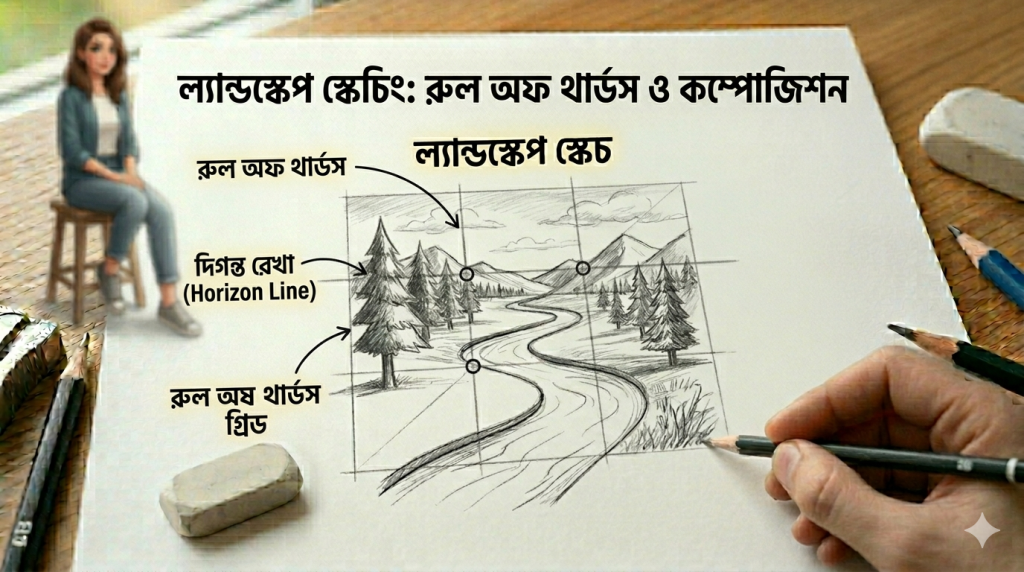
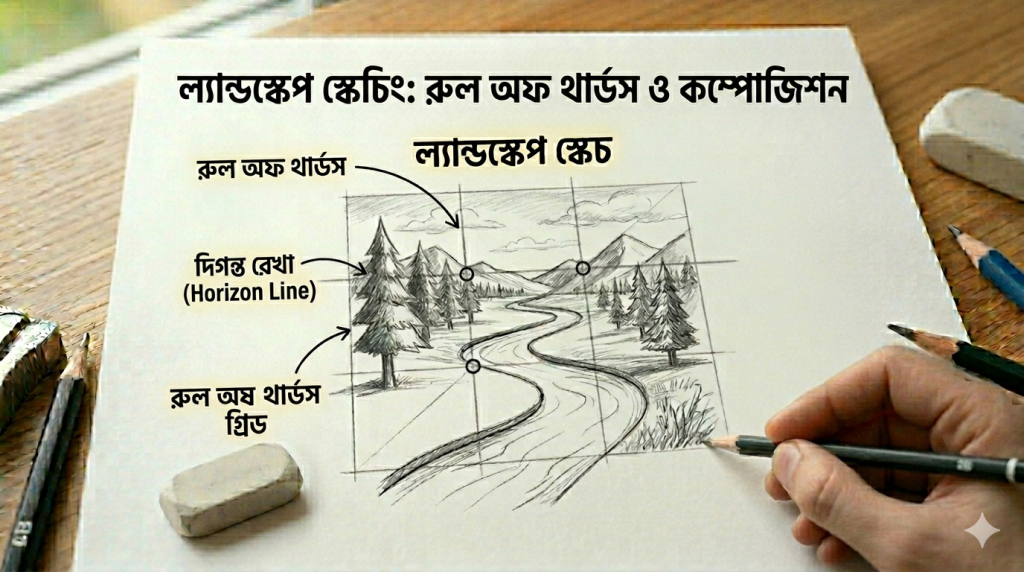
(Image 1: ল্যান্ডস্কেপ স্কেচিংয়ের জন্য ‘রুল অফ থার্ডস’ (Rule of Thirds) এবং ‘দিগন্ত রেখা’ (Horizon Line) চিহ্নিত করা হয়েছে। একটি সাধারণ ল্যান্ডস্কেপ কম্পোজিশন দেখানো হয়েছে।)

কালার পেন্সিল দিয়ে ল্যান্ডস্কেপ স্কেচিংয়ের প্রথম ধাপ হলো সঠিক কম্পোজিশন নির্বাচন। ছবিতে গভীরতা তৈরি করতে আপনি ৬ নং পর্বে শেখা ‘রুল অফ থার্ডস’ (Rule of Thirds) এবং ‘দিগন্ত রেখা’ (Horizon Line) এর অবস্থান এখানে খুব গুরুত্বপূর্ণ। দিগন্ত রেখাকে কখনও ছবির ঠিক মাঝখানে না রেখে, উপরের বা নিচের এক-তৃতীয়াংশে রাখুন, যাতে ছবিটি আরও ভারসাম্যপূর্ণ দেখায়।
আর্ট টিউটোরিয়াল সিরিজ: পর্ব ০৭ - কালার পেন্সিল টিউটোরিয়াল: রঙিন পেনসিল দিয়ে প্রথম ল্যান্ডস্কেপ স্কেচ 1

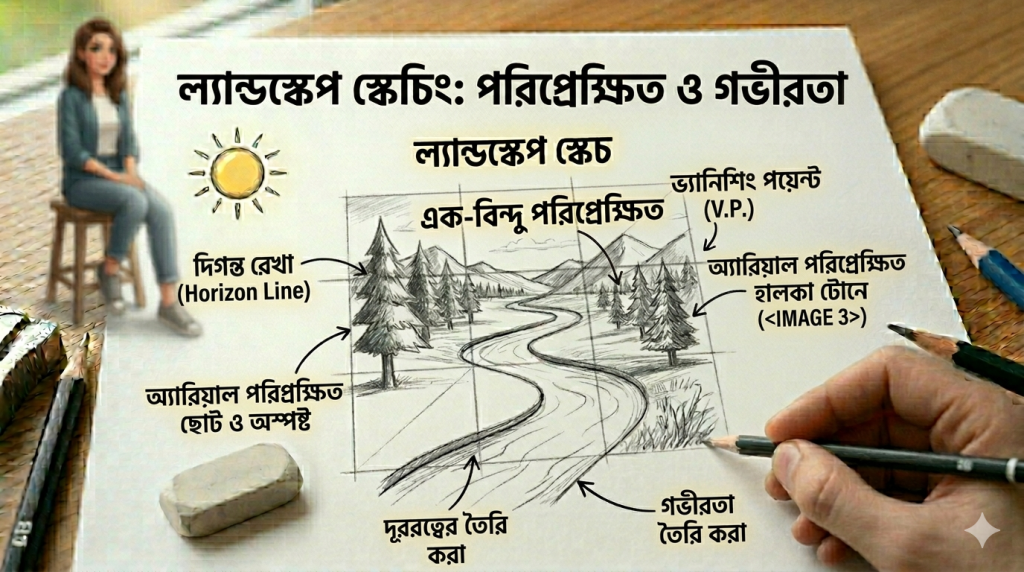
(Image 2: দিগন্তের দিকে একটি আঁকাবাঁকা নদী বা রাস্তা চলে গেছে, যা এক-বিন্দু পরিপ্রেক্ষিতের (One-Point Perspective) নিয়ম মেনে আঁকা হয়েছে।)

আউটডোরে গেলে পরিপ্রেক্ষিত বা পার্সপেক্টিভ আরও বাস্তবসম্মতভাবে ধরা যায়। দূরে মিলিয়ে যাওয়া একটি নদী, রাস্তা বা সারিবদ্ধ গাছ আঁকার সময় ২ নং পর্বের এক-বিন্দু পরিপ্রেক্ষিতের (One-Point Perspective) এবং ৬ নং পর্বের পরিপ্রেক্ষিতের নিয়ম (Perspective rules) প্রয়োগ করুন। ছবিতে গভীরতা তৈরি করতে আপনি ‘অ্যারিয়াল পরিপ্রেক্ষিত’ (Aerial Perspective) ব্যবহার করতে পারেন—দূরের পাহাড় বা গাছগুলো সামনের বস্তুর তুলনায় ছোট, অস্পষ্ট এবং হালকা টোনে (tone) আঁকুন।
See also  আর্ট টিউটোরিয়াল সিরিজ: পর্ব ০৩ - আলো-ছায়ার জাদু: ছবিতে ত্রিমাত্রিক গভীরতা তৈরির কৌশল
আর্ট টিউটোরিয়াল সিরিজ: পর্ব ০৭ - কালার পেন্সিল টিউটোরিয়াল: রঙিন পেনসিল দিয়ে প্রথম ল্যান্ডস্কেপ স্কেচ 2

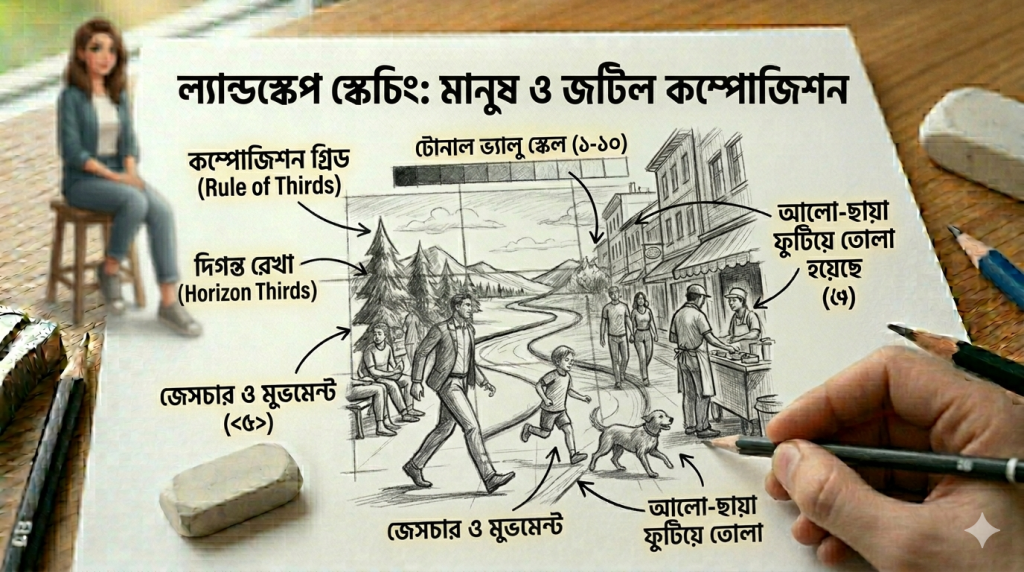
(Image 3: একটি আউটডোর দৃশ্যে বিভিন্ন ধরণের ল্যান্ডস্কেপ উপাদান—আকাশ, গাছ, পাহাড়, নদী—আঁকার সময় টোনাল ভ্যালু (Tonal Value) এবং টেক্সচারের (Texture) সঠিক ব্যবহার দেখানো হয়েছে।)

প্রকৃতিতে অনেক ধরণের টেক্সচার (texture) থাকে। যেমন গাছের পাতা, জলের ঢেউ, পাহাড়ের পাথর। এগুলো ফুটিয়ে তোলার জন্য ৩ নং পর্বের শেডিং টেকনিক (Shading Technique) এবং ৬ নং পর্বের টোনাল ভ্যালু এবং টেক্সচারের নিয়ম (Tonal Value and Texture rules) ব্যবহার করুন। কালার পেন্সিল দিয়ে আঁকার সময় শুধু আউটলাইন না এঁকে, টোন বা আলো-ছায়ার প্রলেপ দিয়ে বস্তুর আকার ফুটিয়ে তুলুন। ছবির সামনের অংশের (foreground) বস্তুগুলোতে বেশি ডিটেইল এবং গাঢ় টেক্সচার দিন, আর দূরের অংশে হালকা শেডিং দিন। জলের প্রতিচ্ছবি আঁকার সময় উপরের বস্তুর উল্টো প্রতিচ্ছবি আঁকুন, এবং টোন কিছুটা হালকা রাখুন।
আর্ট টিউটোরিয়াল সিরিজ: পর্ব ০৭ - কালার পেন্সিল টিউটোরিয়াল: রঙিন পেনসিল দিয়ে প্রথম ল্যান্ডস্কেপ স্কেচ 3

(Image 4: একটি জটিল কম্পোজিশনে একাধিক মানুষের জেসচার এবং মুভমেন্টের সঠিক ব্যবহার ল্যান্ডস্কেপের সাথে সমন্বয় করে দেখানো হয়েছে।)

যদিও আপনি ল্যান্ডস্কেপ আঁকছেন, কিন্তু ছবিতে মানুষ বা প্রাণী যোগ করলে তাতে জীবন সঞ্চার হয় এবং ছবিটি আরও গল্পময় মনে হয়। ৫ নং পর্বের জেসচার ড্রয়িং (Gesture Drawing) এবং শরীরের অনুপাত (proportions) ব্যবহার করে দূরের মানুষকে ল্যান্ডস্কেপের স্কেলের (scale) সাথে সমন্বয় করে আঁকুন। তারা কী কাজ করছে বা কোন দিকে তাকিয়ে আছে, তা ছবির সামগ্রিক মুভমেন্টের (movement) সাথে মিলিয়ে দিন।
আর্ট টিউটোরিয়াল সিরিজ: পর্ব ০৭ - কালার পেন্সিল টিউটোরিয়াল: রঙিন পেনসিল দিয়ে প্রথম ল্যান্ডস্কেপ স্কেচ 4

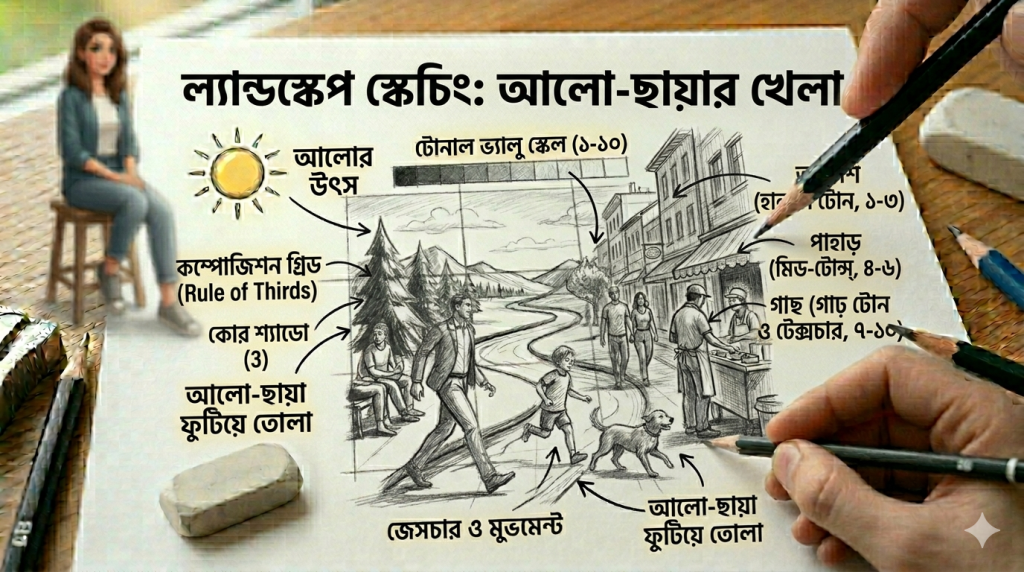
(Image 5: একটি স্টিল লাইফ এবং মানুষের পোর্ট্রেটের সমন্বয়, যেখানে আলোর উৎস অনুযায়ী মানুষের মুখে আলো-ছায়া ফুটিয়ে তোলা হয়েছে। ল্যান্ডস্কেপে আলো-ছায়ার খেলা দেখানো হয়েছে।)

আউটডোর স্কেচিংয়ের সবচেয়ে বড় চ্যালেঞ্জ হলো পরিবর্তনশীল আলো। ৩ নং পর্বের আলো-ছায়ার নিয়ম (Light and Shadow) এবং ৬ নং পর্বের আলো-ছায়ার নিয়ম (Light and Shadow rules) এখানে খুব সতর্কভাবে প্রয়োগ করতে হবে। ছবির একটি নির্দিষ্ট দিক থেকে আলো আসছে বলে ধরে নিন। সূর্যের অবস্থান অনুযায়ী বস্তুর ছায়া (cast shadow) এবং নিজের ছায়া (core shadow) চিহ্নিত করুন। মেঘলা দিন বা রোদের তফাৎ অনুযায়ী টোনাল ভ্যালু (tonal value) নিয়ন্ত্রণ করুন। ছবির উজ্জ্বল অংশে পেন্সিলের হালকা প্রেশারে (HB বা 2B) এবং গাঢ় ছায়ায় (4B বা 6B) প্রেশার দিন। কালার পেন্সিলের ব্যবহার করে আমরা কীভাবে আলো-ছায়া ফুটিয়ে তুলতে পারি, তা আমরা এই পর্বে বিস্তারিতভাবে দেখব।

See also  শিল্পের নেপথ্যে বিজ্ঞান: সৃজনশীলতার এক অদৃশ্য সমীকরণ

কালার পেন্সিলের ব্যবহার আপনার শিল্পবোধকে আরও উন্নত করবে। শুরুতে নিখুঁত ছবি আঁকার চেষ্টা না করে, দ্রুত স্কেচ করে বস্তুর গঠন এবং কম্পোজিশন ধরার প্র্যাকটিস করুন। পরবর্তী পর্বে আমরা শিখব কীভাবে রঙিন পেন্সিল দিয়ে প্রকৃতি থেকে আঁকা ছবিগুলোকে আরও জীবন্ত করা যায়। আঁকতে থাকুন, কারণ প্রতিটি রেখাই আপনাকে একজন দক্ষ শিল্পী হওয়ার পথে এগিয়ে দিচ্ছে।

Scroll to Top